




Pakenham — Lanark County
📍 Pakenham, Ontario (Mississippi Mills)
🏡 Historic mill village along the Mississippi River
🌾 Rural heritage, scenic countryside, and nearby farm experiences
Plan Your Visit
📍 Location: Pakenham, Ontario (Mississippi Mills, Lanark County)
🕒 Season: Year-round rural destination with seasonal events and activities
🏡 Experience: Historic village, stone bridge, local shops, nearby farms and countryside
🚗 Parking: Street parking and municipal lots available in the village
🌐 Community Information: Town of Mississippi Mills
Discover a Historic Mill Village in the Ottawa Valley
Located along the Mississippi River in Lanark County, the village of Pakenham offers visitors a charming introduction to rural life in the Ottawa Valley. Surrounded by rolling farmland and scenic countryside, the village reflects the traditions and landscapes that have shaped rural communities in this part of Ontario for generations.
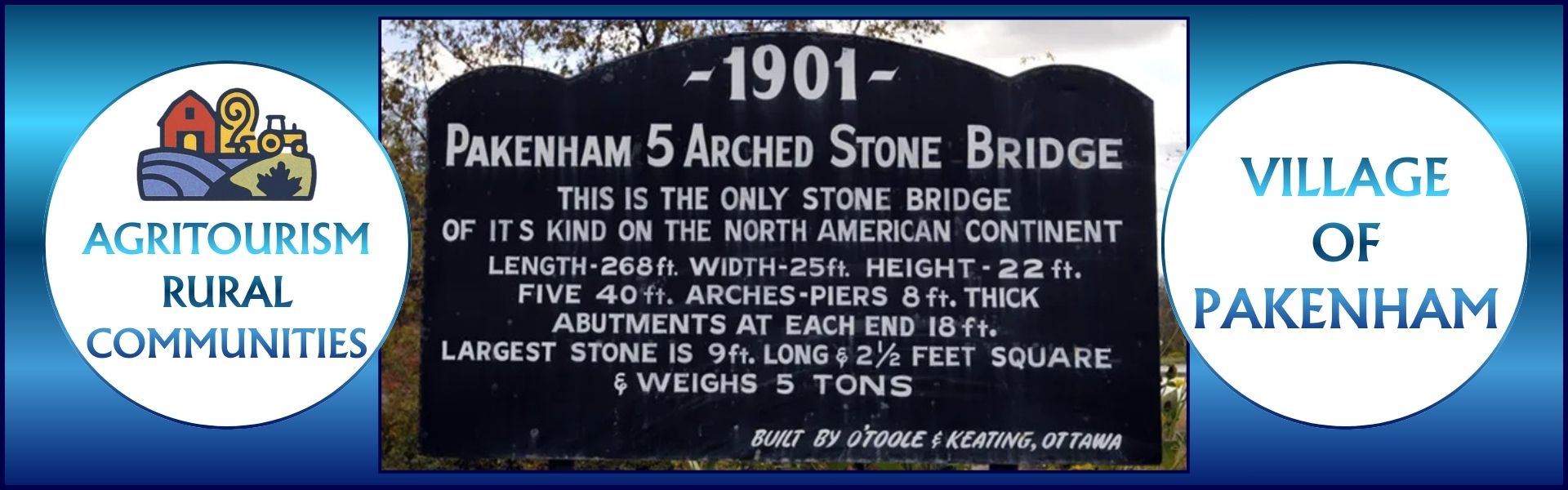
Pakenham is perhaps best known for its historic five-span stone bridge, one of the oldest of its kind in North America. The village grew during the 19th century as a mill and service centre for nearby farms, and today its historic buildings and welcoming main street continue to reflect that rural heritage.
For visitors exploring agritourism destinations across Lanark County and the Ottawa Valley, Pakenham provides a picturesque stop where history, agriculture, and community traditions come together.
Did You Know?
Pakenham’s five-arch stone bridge, built in 1903, is the only bridge of its kind in North America and remains one of the village’s most recognizable landmarks.

A Scenic Rural Community Built on Heritage and Agriculture
Pakenham is a picturesque rural village in Lanark County, located within the Township of Mississippi Mills. Set along the banks of the Mississippi River, Pakenham is widely regarded as one of eastern Ontario’s most scenic small communities, known for its stone buildings, historic streetscape, and natural setting.
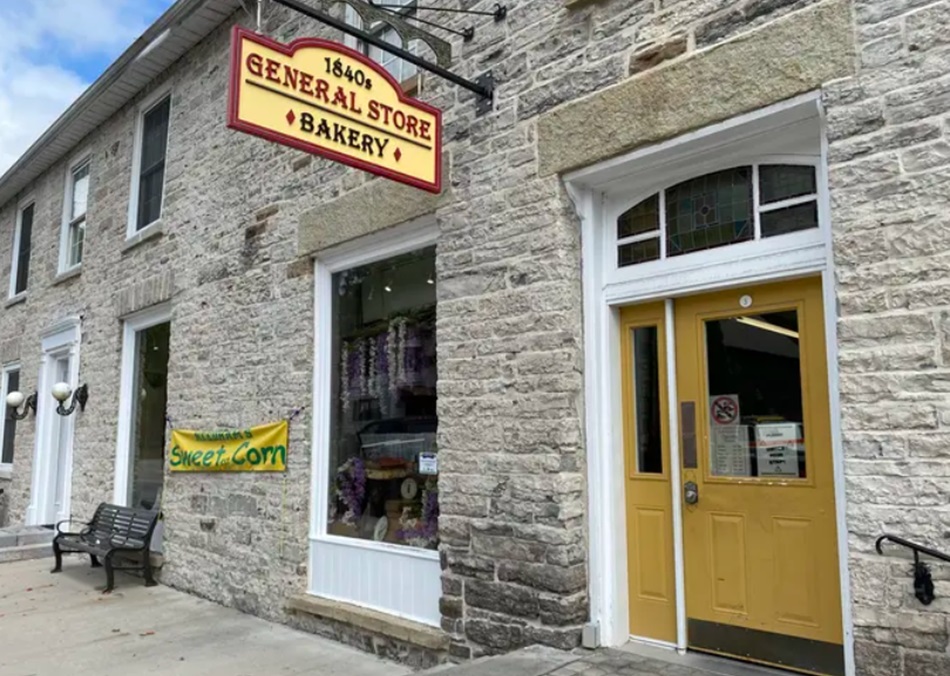
The village dates back to the early 1820s, when settlement followed the river and the power it provided. Pakenham quickly developed around mills, bridges, and river crossings that served both residents and travellers moving through the region. Its historic core remains remarkably intact, giving the community a timeless feel that reflects its early origins while still supporting everyday village life.
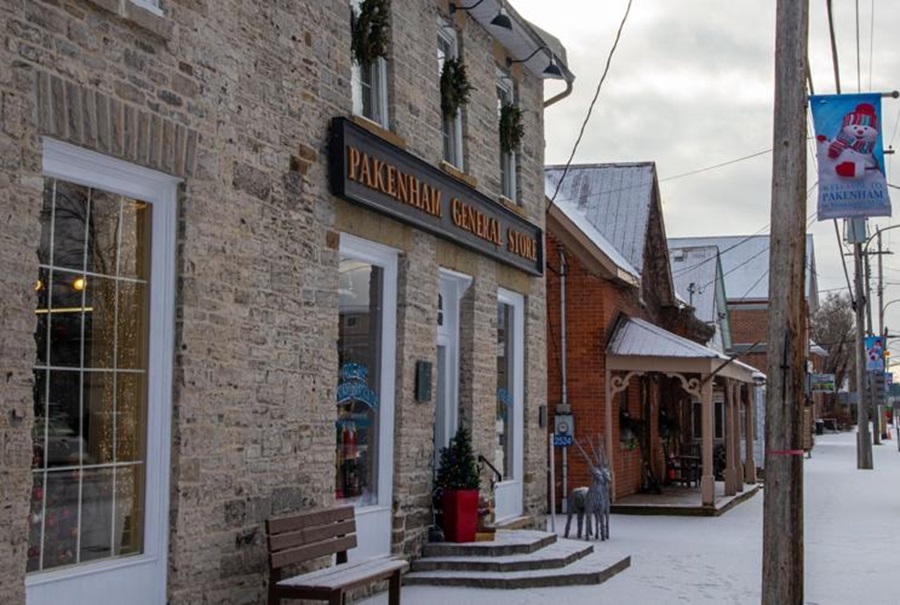
Today, Pakenham balances heritage and livability. While closely connected to nearby towns such as Almonte and Ottawa’s western edge, it has retained a distinctly rural identity. The village is a destination in its own right, valued for its walkable core, surrounding countryside, and strong sense of community pride.